Brain Hacks to Stop Overthinking and Avoid Summer Anxiety Spirals
Tips for teachers and students off for the summer
I’ve noticed a major theme as of late, especially with summer break starting and teachers and students finally being off for the summer.
While the change of season brings a welcome relief from a stressful work or school environment. It also introduces a sneaky mental health challenge... a massive wave of unstructured time. When we don't give our minds something intentional to focus on, the brain will instinctively find its own data to chew on.
Unfortunately, an under-occupied mind rarely wanders to a peaceful place. Instead, it drifts into a field of worries, hits of self-criticism, and loud reminders of all the things you "should" be doing. To avoid the discomfort of being trapped in your own head. Most people result to hours of mindless scrolling—which only leaves you feeling guilty for "wasting" a beautiful summer day on your phone. This is exactly how anxiety spirals in the summer catch us off guard.
If you want to know how to stop overthinking and protect your peace, the secret lies in giving your brain simple, tactile tasks. Keeping a few specific tools around the house can give your mind a gentle break and keep you out of your head.
If you need time to think, reflect, or plan, I encourage you to intentionally schedule 15 minutes for it. Otherwise? Feel free to busy your hands. No one deserves to spend their summer feeling anxious or beating themselves up. Here are six simple brain hacks for anxiety to keep you grounded this season.
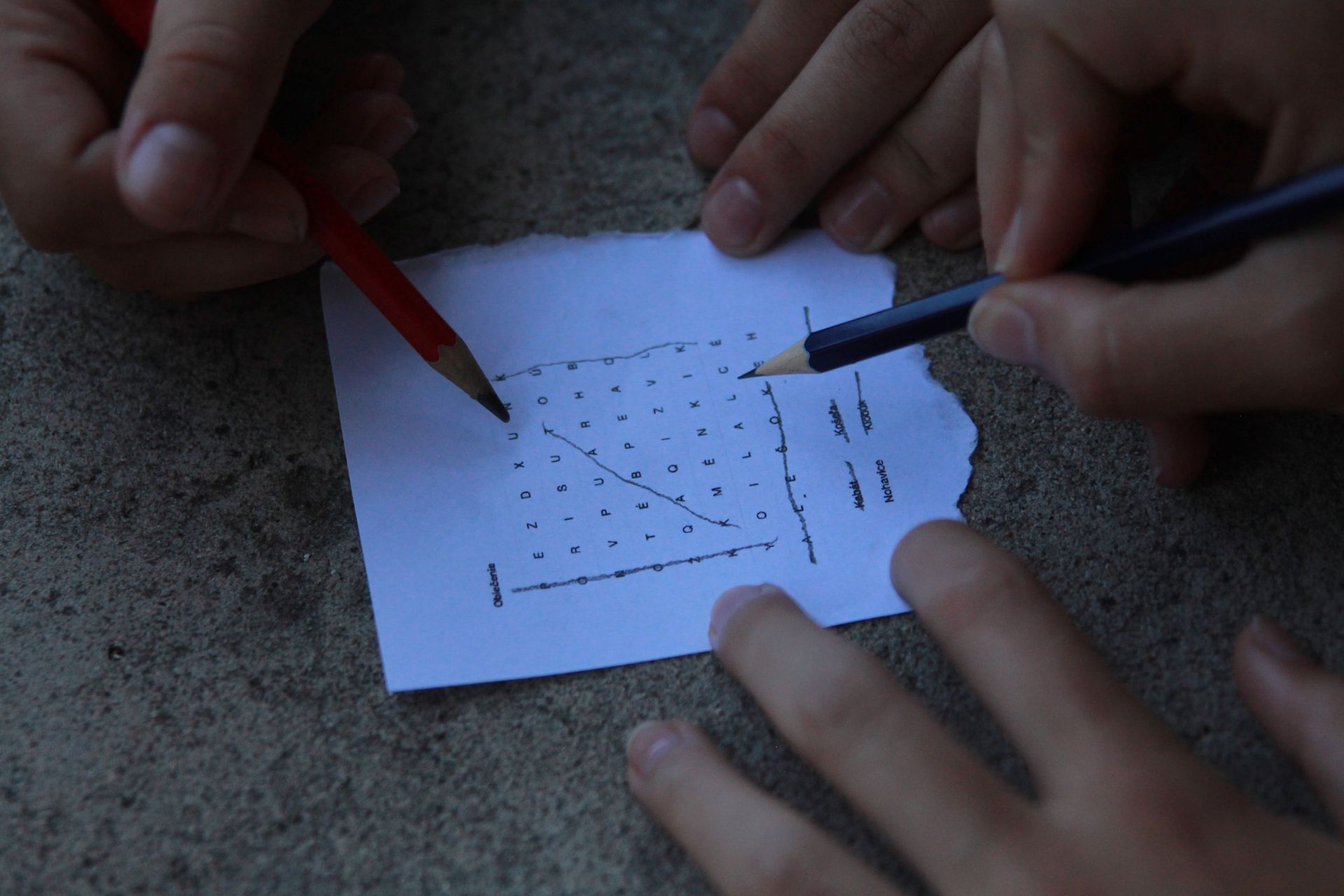
Grab a Physical Word Search Puzzle
I know... it sounds almost too simple. But keeping a physical puzzle book on your coffee table is a fantastic preventative tool. One of my friends recently got me a Taylor Swift word search that doubles as a coloring book!
The golden rule here: keep it physical, not on your phone. The tactile sensation of holding a pen and the visual scanning required to find letters makes this a highly effective grounding tool.
The Science: A study published in NeuroImage: Clinical emphasizes that structured cognitive engagement acts as an effective form of "emotional distraction" (Pan et al., 2020). When you engage your brain's working memory with an external, neutral task like a word puzzle, you physically intercept the neural pathways used for worry. This limits the cognitive resources your brain has available to fuel a negative thought loop.
Have a book laying around so you can pick it up for just a few minutes the moment you notice yourself overanalyzing.
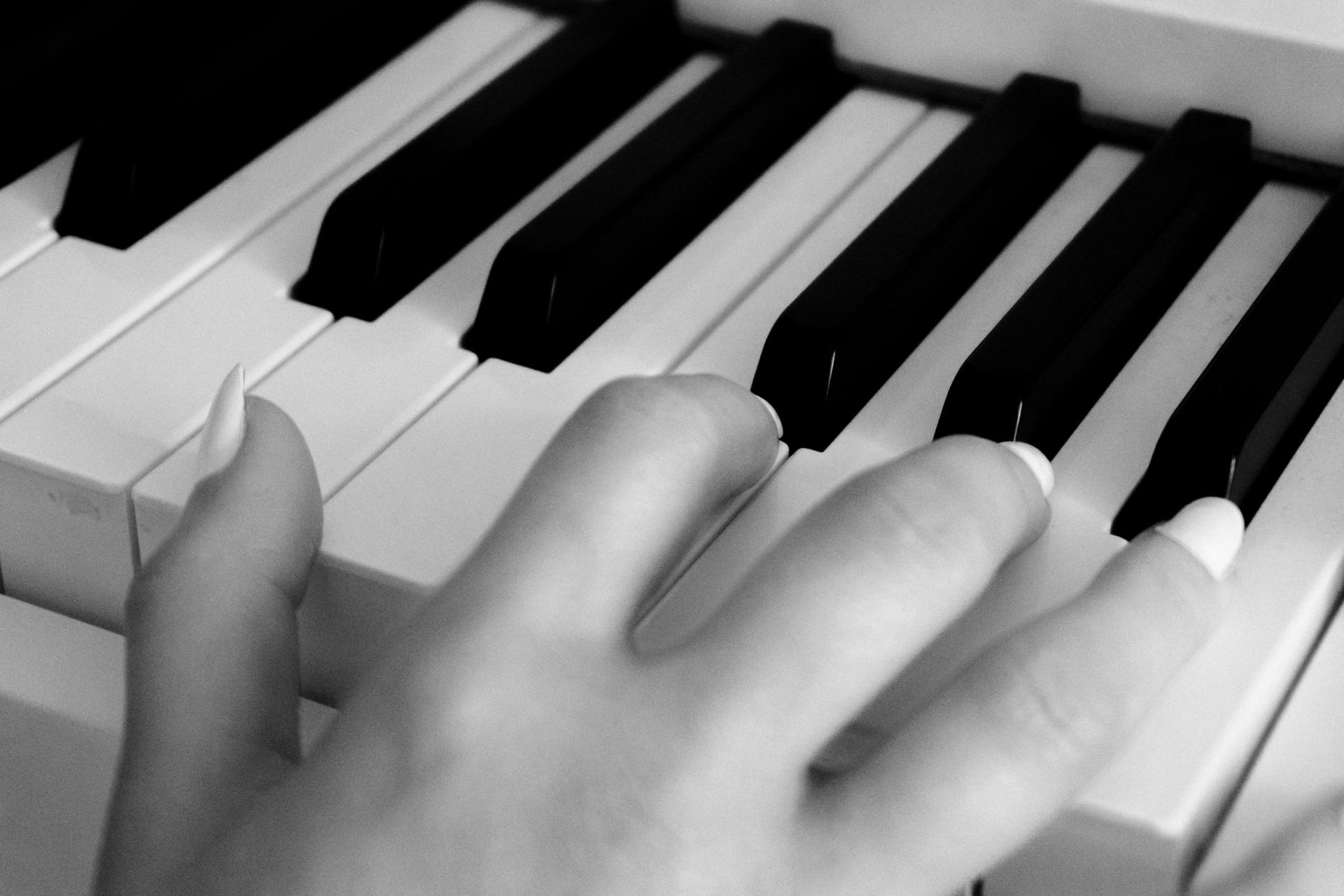
Pluck Away at an Instrument
If you have access to a keyboard, guitar, piano, or any musical instrument, put it on your "go-to" list when you catch yourself floating into an anxious headspace. You don't need to be Mozart, and you don't need to practice for hours. Just sit down and pluck at the keys or strings for 5 to 10 minutes.
The Science: According to a clinical trial published in PLOS ONE, auditory and music-based interventions have a profound, immediate effect on reducing both somatic (body-based) and cognitive anxiety (Mallik & Russo, 2022). Actively interacting with an instrument creates a focused stream of sensory input that breaks the hyper-reactivity of the hypothalamic-pituitary-adrenal (HPA) axis—the system responsible for churning out stress chemistry.
The "Count to 10" Couch Reset
If you find yourself frozen on the couch, trapped in a paralysis of overthinking, use the 10-second rule. Count to 10 out loud or in your head, and on 10, physically force yourself to stand up.
Don't worry about having a grand plan of what to do next. Just make your initial goal small: walk to the kitchen and pour a glass of cold water. Once you're on your feet, see where the momentum takes you. You might walk to the window to look outside, or step onto the balcony for fresh air. Another wonderful option is to simply drop to the floor and stretch—our bodies carry so much physical tension from anxiety, and stretching acts as a wonderful biological release.
The Science: This strategy leverages the clinical framework of behavioral activation. In neurobiological research, such as studies highlighted in Physiological Reviews, introducing an immediate, physical action interrupts the subcortical "freeze" response mediated by the amygdala (Bouton et al., 2021). By shifting immediately from thought to physical movement, you override the brain's tendency to talk you out of moving.
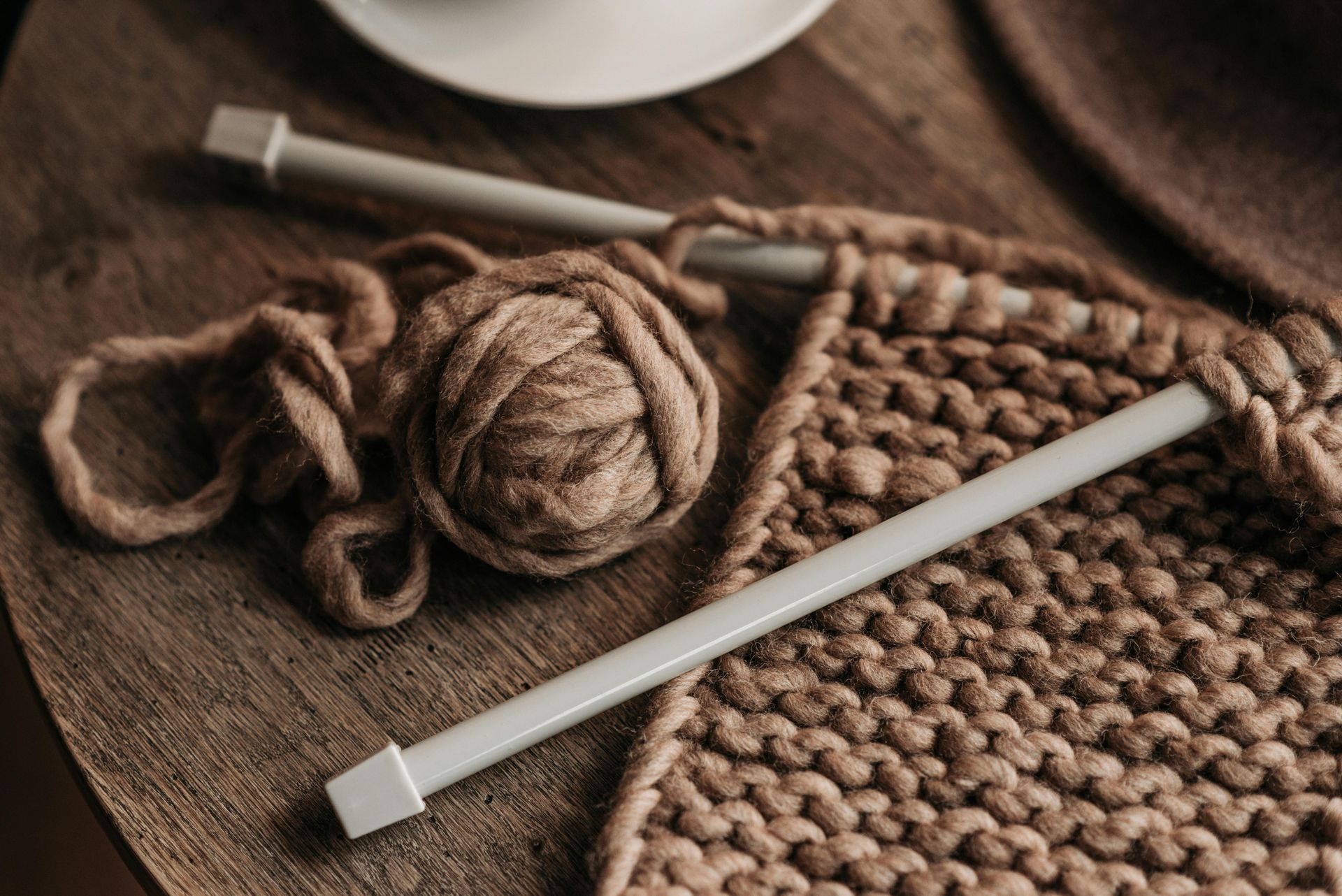
Try Knitting or Crocheting
Summer is the perfect time to pick up a new tactile hobby like knitting or crocheting. While it can definitely be a lesson in patience... due to the learning process and potential of miscounting your stitches - the mental health payoff is massive. It's another form on bilateral stimulation and rhythmic. Making it highly regulating for the brain and emotions. I've also noticed an increase in embroidery as well. Could be a great alternative.
The Science: A major landmark study published in the British Journal of Occupational Therapy surveyed over 3,500 crafters and discovered a significant statistical link between knitting frequency and emotional resilience (Riley et al., 2013). Frequent knitters reported feeling drastically calmer, happier, and less stressed. The rhythmic, automatic, left-to-right hand movements serve as an accessible grounding mechanism that induces a meditative, protective state of psychological "flow."

When in Doubt, Walk It Out
If the weather is nice and your mind is moving a mile a minute, don't sit still—take your thoughts on a walk. Walking creates literal, physical movement that helps move stuck energy through your body. The movement can helps thoughts become unstuck. Walking can provide movement in your thoughts. The bilateral stimulation can be regulating and provide an atmosphere for more creative problem solving. Going on a walk with your partern too is a great time to have discussions.
The Science: In clinical research, alternating bodily movements—like the left-right stride of walking—generate natural bilateral stimulation. A multi-channel study published in PLOS ONE demonstrates that rhythmic bilateral stimulation significantly reduces hyper-arousal in the prefrontal cortex while enhancing feelings of systemic relaxation and psychological comfort (Amano & Toichi, 2016). This bilateral patterning encourages both brain hemispheres to communicate, effectively transforming anxious loops into creative, problem-solving thoughts.
Have a 5-Minute Dance Break
Turn on an upbeat track and intentionally throw yourself a mini dance party in your living room. Getting your heart rate up, shaking out your limbs, and letting go of control is one of the fastest ways to reset your emotional baseline.
The Science: According to research published in The Arts in Psychotherapy, movement-based therapies like dancing drastically reduce clinical anxiety scores. Dancing releases endorphins, decreases muscular tension, and forces a shift from "living in your head" to being fully embodied in your physical senses. It is a powerful somatic reset for a dysregulated nervous system.
Other Quick Summer Anchors to Explore:
If none of the above speak to you, try leaning into activities that require regular, gentle stewardship. Taking a throwback to the days of a Tamagotchi...finding ways keep you grounded in a routine and a reason to get up and feed something:
- Tending to plants or a summer garden (Connecting with soil lowers stress chemistry).
- The art of sourdough (The kneading and strict feeding schedule provides great structure).
How are you planning to protect your mental health and stop overthinking while off for the summer? Check out our instagram to let us know!
References
- Amano, T., & Toichi, M. (2016). The role of alternating bilateral stimulation in establishing positive cognition in EMDR therapy: A multi-channel near-infrared spectroscopy study. PLOS ONE, 11(10), e0162735.
https://doi.org/10.1371/journal.pone.0162735
Cited by: 107 - Bouton, M. E., Maren, S., & McNally, G. P. (2021). Behavioral and neurobiological mechanisms of pavlovian and instrumental extinction learning. Physiological Reviews, 101(2), 611–681.
https://doi.org/10.1152/physrev.00016.2020
Cited by: 469 - Finnerty, R. (2024). Group music therapy for the proactive management of stress and anxiety. PLOS Mental Health, 1(1).
https://doi.org/10.1371/journal.pmen.0000312
Cited by: 1 - Mallik, A., & Russo, F. A. (2022). The effects of music & auditory beat stimulation on anxiety: A randomized clinical trial. PLOS ONE, 17(3), e0259312.
https://doi.org/10.1371/journal.pone.0259312
Cited by: 79 - Pan, D., Hoid, D., Gu, R., & Li, X. (2020). Emotional working memory training reduces rumination and alters the EEG microstate in anxious individuals. NeuroImage: Clinical, 28, 102488.
https://doi.org/10.1016/j.nicl.2020.102488
Cited by: 59 - Riley, J., Corkhill, B., & Morris, C. (2013). The benefits of knitting for personal and social wellbeing in adulthood: Findings from an international survey. British Journal of Occupational Therapy, 76(2), 50–57.
https://doi.org/10.4276/030802213x13603244419077
Cited by: 310
Meet
Our Therapists



Previous Blogs







Interested in our services? We’re here to help!
We want to get to know your needs so that we can provide the perfect solution. Give us a call today and we’ll do our best to help.