
The Science of Seasonal Living in Texas

Cherie Spellman • March 5, 2026

Some of our favorite wellness products for you to check out.

Vibroacoustic Therapy

Inharmony products for at home use

Click here to learn more about Vibracoustic Products
A man is lying on a vibroacoustic bed with headphones on with a woman standing behind him experiencing vibroacoustic therapy in Grapevine Texas.

Use our code WellnessNSC

to receive 5% off your purchase

A bottle of vibrant blue oils parasympathetic on a white background.
Click here for $15 offer

Shop more Oils at their Store

Vibrant Blue Oils

Why You Should Light a Candle Tonight

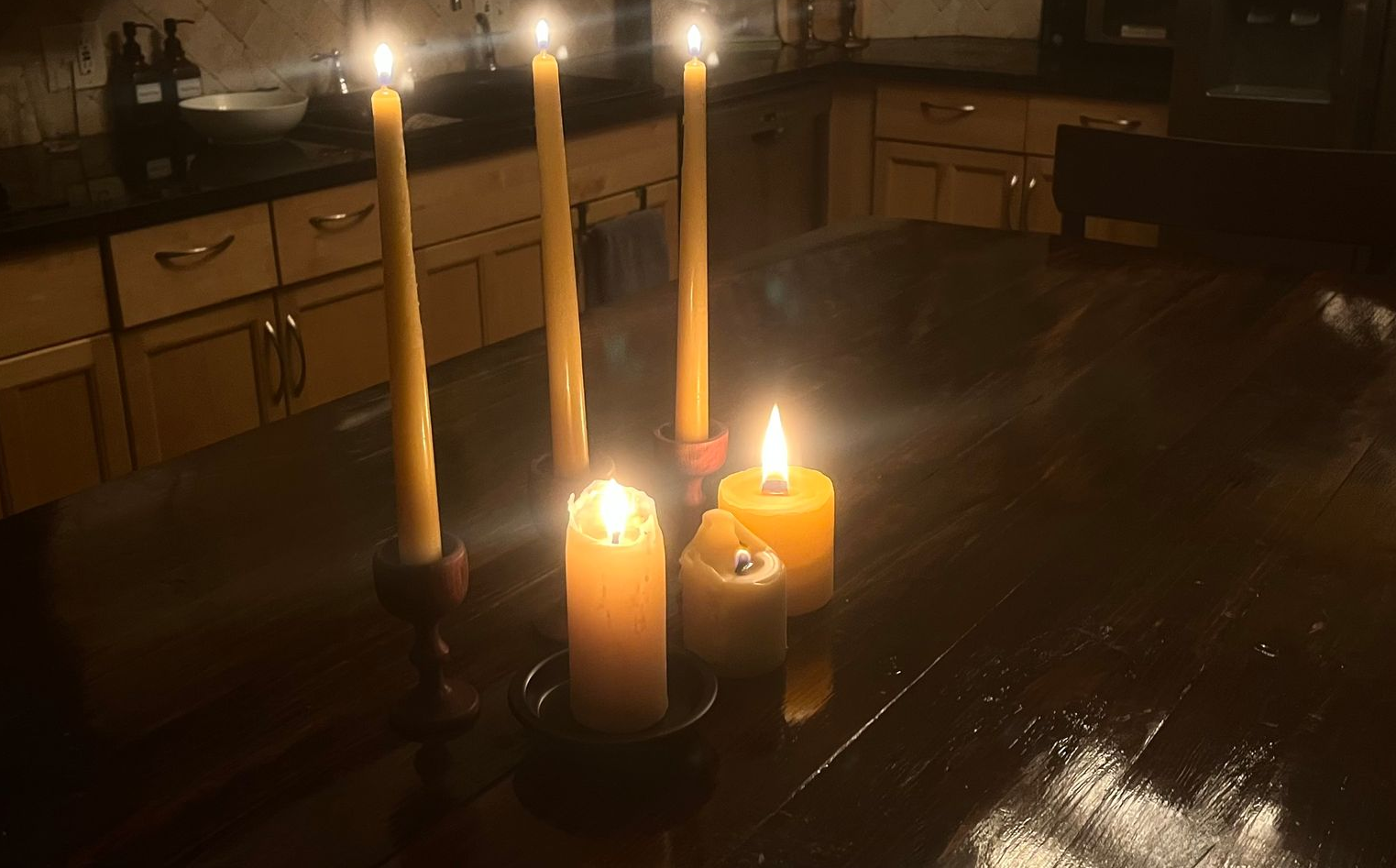
Lit candles on a dark wooden table in a dimly lit kitchen for seasonal living in texas.
In Texas, winter has a personality disorder. One day, you are scraping ice off your windshield - if you even have an ice scraper; the next, you are considering turning the AC back on because the humidity has crept up to 80%. We don’t get the long, consistent hibernation period that our northern neighbors do. Our window for "living seasonally"—for truly slowing down, turning inward, and embracing the dark—is incredibly short.

Because this season is fleeting, I encourage you to make the most of what is left of it. Because, in other times in the year it's too hot, we have a short window to take advantage of this regulating activity.

This regulating tool isn't a supplement or a new meditation app. It’s likely sitting on your coffee table right now. Going back to tradition simplicity.

We often think of lighting a candle as a simple aesthetic choice—something to do when company comes over or when we want the room to smell like vanilla. But new insights into neurology suggest that candlelight does something more profound to the human brain. It triggers calm not just because of nostalgia or culture, but because the flame interacts with very old neural systems that evolved long before the lightbulb was invented.
Here is how you can use the rest of this short winter to reset your brain, using nothing but a flame.

Let's light those candles...the more the better.

The Evolutionary Signal of Safety

To understand why a simple candle makes us feel better, we have to look back about 400,000 years. For most of human history, our ancestors gathered around fires at night. This wasn't just for warmth; it was a survival mechanism.

In the primal brain, fire equaled safety. It meant protection from predators, warmth against the cold, and the security of community. Over millennia, our biology hardwired this connection.

The calming effect of fire is deeply rooted in human evolution, as fire provided warmth, protection, and a sense of security for early humans (Gowlett, 2016).


A controlled fire is a quick and easy was to signal safety to our systems. Most of us don't have a fireplace in Texas, we typically don't need one... but candles are a nice substitute.


When you strike a match and watch a small, controlled flame today, your brain still recognizes that primal engrained signal. Your amygdala—the part of the brain responsible for threat detection—downshifts. Your parasympathetic nervous system, which controls your "rest and digest" state, engages.


Unlike the sudden, harsh brightness of overhead LEDs or the chaotic motion of a television screen, a flame tells your body that you are in a safe, contained environment. You aren't just setting a mood; you are speaking directly to your biology.

Tuning Your Brainwaves to the Flame

One of the most fascinating aspects of candlelight is the way it moves. If you stare at a candle, you will notice it flickers. This isn't random. A candle flame flickers at a frequency of roughly 1–3 Hz.


This specific speed is crucial because it overlaps with two very important brainwave states:

  • Alpha waves: These are associated with relaxed alertness. It’s that feeling of being calm but present.
  • Theta waves: These are linked to daydreaming, deep meditation, and creativity.

Scientific studies have shown that these frequencies are closely linked to states of mindfulness and relaxation (Tang, Y. Y., Hölzel, B. K., & Posner, M. I. (2015). The neuroscience of mindfulness meditation. Nature Reviews Neuroscience, 16(4), 213–225).


Modern artificial lights, like fluorescents or LEDs, often flicker at high speeds (50–120 Hz). You might not consciously see it, but your brain registers it, often leading to subtle strain. A candle, however, is slow enough for the brain to "entrain" to it. This means your nervous system subtly synchronizes with the rhythm of the flame.


The result is a reduction in "cortical arousal." You don't fall asleep immediately, but you enter a state of reduced stress without sedation. It is a natural way to shift gears after a high-speed day on the highway or a stressful afternoon of Zoom calls.


At North Star Counseling and Wellness we offer other sound therapies and have learned that sound waves under 50 HZ are healing to the brain and help to take into Neuroplasticity and move the brain to regulation.

Breaking the Cycle of Sensory Overload

Our culture has developed environments that are loud...visually and audibly. Even in our homes, we are bombarded with visual noise: the blue light of the router, the glare of the microwave clock, the notifications on our phones, and the stark contrast of white overhead lights. When I visit my family's house I am reminded that some people live in overstimulating environments where there is always a blasting TV. A trip to Costco can send me into stimulation overmode and need a whole evening or afternoon to recover.


This constant sensory input keeps cortisol levels up. The brain is constantly processing, sorting, and reacting. It wants to rest. It needs an environment where it can look around and go okay there's nothing that needs my attention, we can relax at a single point. It's a reason that clutter and someone's stress levels go hand in hand. If the house is a mess so is the mind. I know there's been periods of time where I look around the house and my body becomes instantly tense. If I lower the lighting and make things soft it relaxes.


A candle offers an antidote through a "single focal point." Oooo did I just hear a Brainspot be created? Sorry... Brainspotting joke.


When you dim the lights and rely on a candle, you reduce the sensory load on your brain. A candle has a limited brightness range and provides natural, soft contrast. It gives the brain one stable thing to look at. This acts as a basic form of mindfulness. You don’t have to force yourself to "clear your mind." The flame does the work for you. You may find yourself staring at it and coming out of it really you were processing a lot.


Furthermore, the motion of the flame is "soft." Hard-edged, rapid motion (like scrolling a feed) spikes vigilance. Soft, organic motion (like a fire or leaves in the wind) captures attention without demanding effort. It occupies your mind just enough to stop you from ruminating on your to-do list, but not enough to tax your energy.

Wouldn't we all love a break from our thoughts.


Protecting Your Circadian Chemistry

As Texans, we often fight against the dark. We keep the stadium lights on, the porch lights bright, and the screens glowing until midnight. But this confuses our internal clocks.


Electric lights, especially LEDs, are heavy in blue light wavelengths. This blue light suppresses melatonin, the hormone that tells your body it is time to sleep. It pushes the brain toward daytime alertness, even when it’s 10:00 PM. Research has shown that exposure to short-wavelength blue light suppresses melatonin and disrupts circadian rhythms, while long-wavelength light, like that from candles, has minimal impact on these processes (Cajochen et al., 2005).


Candlelight is different. It emits almost exclusively long-wavelength light—ambers, reds, and oranges. This part of the light spectrum has minimal impact on melatonin production. By switching to candlelight in the evening, you are quietly telling your biology that the day is ending. You are allowing your body to transition naturally into sleep states, rather than jarring it into wakefulness.


I suggest in the evenings, lighting a few candles around the house for light and grabbing a good book or something to keep your hands busy with.

Practical Ways to "Winter" with Candle

Candlight while king a bath to beat depression in Texas

Since our Texas winter is short, we have to be intentional about using it. We get it about one week a year. We have to create the season indoors.


Here is how to incorporate this into your routine for the next few weeks:


1. The Twilight Transition

Instead of waiting until bedtime, light a candle as soon as the sun starts to go down. This bridges the gap between the high energy of the day and the rest of the night. It signals to your household (and your brain) that the "work" portion of the day is done.


2. The "Big Light" Ban

Challenge yourself to turn off the overhead lights after dinner. Rely on lamps and candles. Notice how the atmosphere in the room changes. Notice if your shoulders drop an inch or two. The lower light levels will naturally encourage a lower volume of conversation and a slower pace of movement.


3. Morning Meditation

If you wake up before the sun—which is common in winter—try lighting a candle for your first ten minutes of the day instead of checking your phone. The low flicker can help you wake up gently, stimulating those alpha waves before the chaos of the commute begins. It's a gently way to not spike our stress levels in the morning.


4. Scent Matters

If you choose scented candles, opt for natural scents like beeswax or subtle essential oils. The olfactory system bypasses the thalamus and goes straight to the limbic system, which controls emotion and memory. A familiar, grounding scent can deepen that sense of safety instantly. 


Recommendation: I personally recommend using non-scented candles and preferably beeswax as it's known to help clean the air.
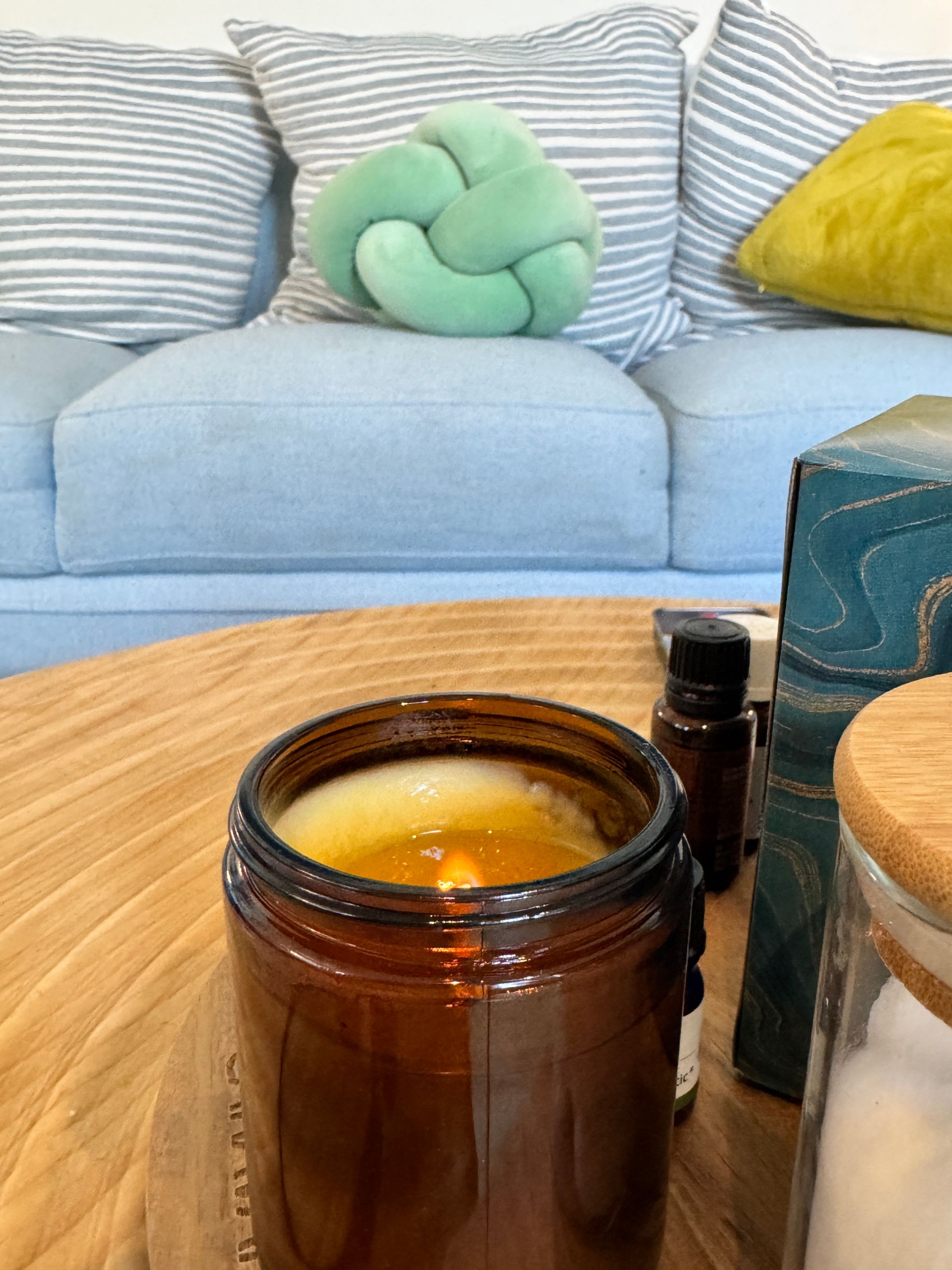


Who doesn't love buying candles?

Candle light while wokring to fight depression in Texas

Living seasonally in Texas means grabbing the cold moments when we get them. It means respecting that even in a warm climate, our bodies still crave a winter rest.


By introducing candlelight into your evenings, you aren't just decorating. You are synchronizing your neural rhythms, protecting your sleep hormones, and engaging ancient safety cues that help you survive the modern world.


So, before the bluebonnets bloom and the humidity returns, buy a box of matches. Turn off the LEDs. Light a flame. Your nervous system will thank you for it.


References: 


Brainwave Entrainment and Relaxation

Tang, Y. Y., Hölzel, B. K., & Posner, M. I. (2015). The neuroscience of mindfulness meditation. Nature Reviews Neuroscience, 16(4), 213–225.


This study discusses how certain frequencies, like alpha and theta waves, are associated with relaxation and mindfulness, which aligns with the flicker frequency of candlelight.


Circadian Rhythms and Light Exposure

Cajochen, C., Münch, M., Kobialka, S., Kräuchi, K., Steiner, R., Oelhafen, P., ... & Wirz-Justice, A. (2005). High sensitivity of human melatonin, alertness, thermoregulation, and heart rate to short wavelength light. The Journal of Clinical Endocrinology & Metabolism, 90(3), 1311–1316.


This research highlights the impact of blue light on melatonin suppression and how long-wavelength light (like candlelight) supports natural circadian rhythms.


Evolutionary Safety Signals of Fire

Gowlett, J. A. J. (2016). The discovery of fire by humans: A long and convoluted process. Philosophical Transactions of the Royal Society B: Biological Sciences, 371(1696), 20150164.


This paper explores the evolutionary significance of fire as a safety signal and its role in human development, which supports the calming effect of candlelight.

Meet

Our Therapists

Previous Blogs

Family laughing together: Mother holding baby, father smiling, all in a home.
January 26, 2026
Navigate the transition to parenthood with ease! This guide offers essential questions and tips to align parenting styles, divide responsibilities, plan finances, build a support system, and nurture your relationship.
Man comforts crying person on bed; white room. Man in pink shirt, person in black shirt.
January 12, 2026
Struggling to connect with your teen? Discover how Bowenian Family Systems Theory can transform parent-teen relationships by fostering healthier communication and emotional balance
Woman feeds man fruit; kitchen setting connecting after couples counseling.
By Isabella de Cárdenas October 22, 2025
Learn practical tips to improve communication skills during arguments. Use 'I' statements, active listening, and other strategies to build a stronger relationship.
Couple holding hands with a blue sky backdrop. The man has a tattoo sleeve. Both are smiling.
By Cherie Spellman October 8, 2025
Discover Emotion Focused Couples Therapy (EFT) in Grapevine, Texas. An expert therapist explains how EFT helps couples heal and reconnect.
September 16, 2025
Have you ever wondered what your body is trying to tell you? In our busy lives, it’s easy to lose touch with the body and its stories — but Dance Movement Therapy (DMT) is here to help you reconnect in a supportive, encouraging way. As Gianina Casale, Dance Movement Therapist, puts it, “Dance movement therapy really integrated my passions with dance and embodiment practices and this desire to support others in their healing journey.” Let’s take a closer look at what DMT is and why more people are discovering its unique, gentle approach to healing Let's dive into Dance Movement therapy base on an interview with Dance Movement Therapist Gianina Casale.
A man wearing headphones and sunglasses is smiling regulating with SSP in Texas
By Cherie Spellman July 9, 2025
Discover how couples therapy in Grapevine, TX uses SSP and somatic therapy to support nervous system regulation and deepen connection. Learn how co-regulation can transform relationships.
A man and a woman who are a couple are sitting on a couch holding hands in low cost counseling.
June 10, 2025
Looking for affordable therapy in Dallas–Fort Worth? Low cost counseling with a therapist intern offers high-quality, supervised mental health care at a fraction of the typical cost. Intern therapists are graduate-level clinicians-in-training, providing compassionate, evidence-based support with sliding scale rates—often between $25–$60 per session. Learn the benefits of working with an intern, how it compares to traditional therapy, and why it’s a great option for individuals seeking trauma-informed, somatic, and nervous-system-centered approaches. Schedule a free consultation today and see if this budget-friendly counseling option is right for you.
A man and a woman are holding hands in front of a blue sky in Grapevine Texas connecting
June 8, 2025
Looking to deepen your relationship and reconnect with your partner? This blog explores how couples in Grapevine, Texas can strengthen their bond through simple, powerful mindfulness practices—a key tool in modern couples counseling.
A couple connecting after a couple counseling session.
By Elizabeth Moore March 22, 2025
Struggling in your relationship? Discover how couples counseling can improve communication, rebuild trust, and strengthen your bond. Learn what to expect, find the right counselor, and start your journey to a healthier relationship today!
Two wedding rings are sitting on a cracked surface.
By Elizabeth Moore March 17, 2025
Looking for strong marriage preparation? Discover how the Prepare-Enrich assessment can build a lasting connection. Learn about communication, conflict resolution, intimacy, and more in our latest blog post.

Interested in our services? We’re here to help!

We want to get to know your needs so that we can provide the perfect solution. Give us a call today and we’ll do our best to help.

Contact us today

Our Services